
 +1 646 308 1670
Poland: Pragmatic market for specialized companies
We’ve expanded our services to the Polish market. We believe in the potential of CEE companies and the value they have to offer the US market. These companies have the expertise, capital, and drive to expand and coming from a smaller market, you always have to think about expansion from day one.
A local perspective from Cedric Fromont, CEO Valians International
We spoke with Cedric Fromont, CEO of Valians International, who helps companies relocate and expand across the CEE region. Cedric provided us with not only local knowledge, but also in-depth business insights drawn from years of experience.

What does it take to succeed in the Polish market?
From our experience supporting foreign companies in Poland, success rarely comes from simply finding a distributor and waiting for the market to develop.
What we see on the ground is that companies perform better when they stay close to the market: understanding what their partners are doing, speaking directly with customers, following opportunities, and adapting their approach when needed.
Poland is a very pragmatic market. You need a clear offer, a good understanding of your competition, and, above all, regular follow-up. One of the most common mistakes we see is underestimating how important persistence and local presence are.
In practice, the companies that succeed are usually the ones that remain engaged with the market over time, rather than treating Poland as a purely opportunistic export destination.
“Poland is a very pragmatic market. You need a clear offer, a good understanding of your competition, and, above all, regular follow-up.”
How do Polish people do business?
What we see in our day-to-day work is a business culture that is quite direct, pragmatic, and focused on concrete results.
Polish managers are generally open to meeting new suppliers or partners, but they expect you to come prepared. Very quickly, the discussion moves to practical questions: What can you offer? What’s different compared with existing suppliers? What are the prices, lead times, and technical advantages?
Another important point from our experience is follow-up. A first meeting can go very well and still lead nowhere if there’s no active follow-up afterward.
Relationships and trust are built progressively. Being responsive, following up regularly, and showing genuine interest in the Polish market make a real difference. A local presence or at least local support is also often appreciated and can help accelerate discussions.
What industries are in especially high demand right now?
From the projects and discussions, we’re currently seeing on the ground, several sectors are particularly active.
Defense and aerospace are clearly among them. Poland is investing heavily in its military capabilities, but this is also creating opportunities throughout the supply chain for components, industrial equipment, technologies, and specialized services.
Energy is another major area, particularly around offshore wind, nuclear energy, and energy infrastructure.
We’re also seeing strong demand linked to industrial modernization. Polish manufacturers are investing in automation, robotics, production equipment, and technologies that can improve productivity.
Infrastructure, digital technologies, cybersecurity, healthcare, and life sciences are also generating opportunities.
What’s interesting is that these opportunities aren’t limited to large multinational companies. We increasingly see room for specialized SMEs with strong technology, know-how, or niche expertise.
“Opportunities in Poland aren’t limited to large multinational companies. We increasingly see room for specialized SMEs with strong technology, know-how, or niche expertise.”
Why is Poland such an attractive market?
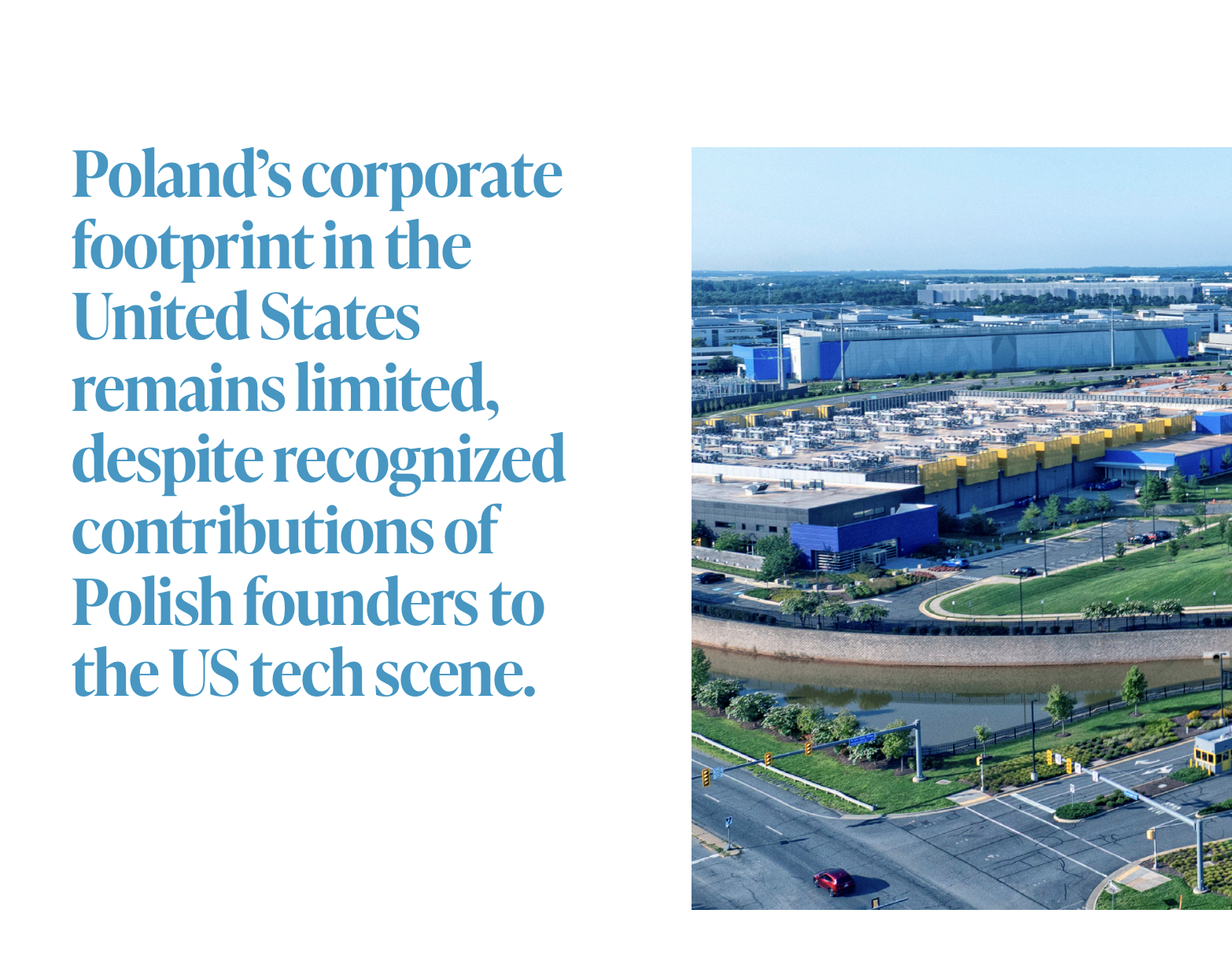
Poland is accelerating its rise as a key player in Central and Eastern Europe, and the US-Poland relationship is already deep and growing. The US is Poland’s largest non-EU investor, with close to $30 billion in FDI. However, Polish capital stock in the US stood at just under $0.6 billion in 2024, still modest, which tells us there’s real room to grow.
We believe that in the coming years, Polish companies will fill this gap.
Voice of the numbers
~ $1 trillion economy, officially top 20 globally
~ 7x GDP per capita growth since the ’90s, with steady growth through every major crisis
~ Labor costs 50% below the EU average without sacrificing talent (STEM grads above EU average)
~ $30 billion in US investment, America’s biggest bet in Poland outside the EU
~ 6 in 10 US firms plan to invest more, 3 in 4 already grew their footprint there
Source: AmCham.PL
More from Hydra Consulting
Hydra Consulting offers a full-service representation to European businesses coming to America. We handle company setup, taxes, visas and business development.


NYC
295 Madison Ave, 12th Floor
New York, NY 10017
United States
PRG
Korunní 108
Praha 10, 10100
Czech Republic
 +1 646 308 1670
 info@hydra-consulting.net
NYC
295 Madison Ave, 12th Floor
New York, NY 10017
United States
PRG
Korunní 108
Praha 10, 10100
Czech Republic
© 2026 Hydra Consulting LLC
This site is protected by reCAPTCHA and the Google Privacy Policy and Terms of Service apply.
© 2026 Hydra Consulting LLC
This site is protected by reCAPTCHA and the Google Privacy Policy and Terms of Service apply.
NYC
295 Madison Ave, 12th Floor
New York, NY 10017
United States
PRG
Korunní 108
Praha 10, 10100
Czech Republic
© 2026 Hydra Consulting LLC
This site is protected by reCAPTCHA and the Google Privacy Policy and Terms of Service apply.


